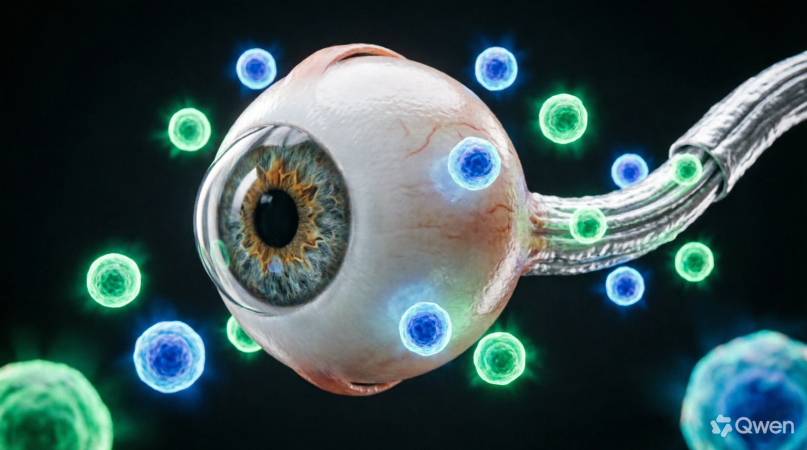
The landscape of neuro-ophthalmology is undergoing a profound transformation, driven by the relentless pursuit of curative interventions for conditions previously deemed intractable. Among these, nystagmus, characterized by involuntary, rhythmic oscillations of the eyes, has long presented a formidable challenge to clinicians and patients alike. Traditional management strategies have largely focused on symptomatic relief through pharmacological agents, optical corrections, or surgical interventions aimed at altering extraocular muscle tension. However, the emergence of regenerative medicine has introduced a novel therapeutic avenue that targets the underlying neural deficits rather than merely masking the symptoms. This innovative approach leverages the pluripotent capabilities of cellular biology to restore functional integrity to the oculomotor system. As research accelerates, the concept of nystagmus treatment with stem cells is gaining traction as a potential game-changer, offering hope for significant visual acuity improvement and enhanced quality of life. The integration of advanced biotechnology with clinical ophthalmology promises to redefine the standard of care, moving from palliative measures to restorative therapies that address the root causes of ocular instability.
Understanding the Pathophysiology of Nystagmus
To appreciate the potential of stem cell therapy, one must first comprehend the complex neurological mechanisms governing eye movement. Nystagmus is not a singular disease but a sign of dysfunction within the vestibular, cerebellar, or brainstem pathways. The condition manifests as repetitive, uncontrolled movements that can be horizontal, vertical, torsional, or mixed. These oscillations disrupt fixation, leading to reduced visual acuity, oscillopsia, and compensatory head postures. The etiology is diverse, ranging from congenital anomalies to acquired neurological disorders such as multiple sclerosis, stroke, or traumatic brain injury. In congenital cases, the defect often lies in the development of the fovea or the neural circuits responsible for maintaining steady gaze. Acquired forms may result from damage to the velocity storage mechanism in the brainstem or impaired inhibitory control from the cerebellum.
The pathophysiology involves a delicate balance between excitatory and inhibitory signals within the central nervous system. Disruption in this balance leads to the characteristic drift and corrective saccades seen in nystagmus. For instance, in infantile nystagmus syndrome, there is often a failure in the development of the null point, where eye movements are minimal. In acquired cases, lesions in the medial longitudinal fasciculus or the vestibular nuclei can trigger pathological oscillations. Understanding these neural substrates is crucial for developing targeted therapies. Traditional treatments, such as gabapentin or baclofen, aim to modulate neurotransmitter activity, but they often come with systemic side effects and limited efficacy. Surgical options, including tenotomy or recession of extraocular muscles, attempt to shift the null point or reduce amplitude, but they do not address the neural origin of the disorder. Thus, the need for a therapy that can repair or replace damaged neural tissue is paramount.
The Role of Neural Circuitry and Oculomotor Stability
The stability of gaze relies on intricate neural networks involving the frontal eye fields, superior colliculus, and cerebellar flocculus. These structures work in concert to generate smooth pursuit, saccades, and vestibulo-ocular reflexes. When any component of this network is compromised, the result is often nystagmus. The cerebellum, in particular, plays a critical role in error correction and motor learning. Damage to Purkinje cells or granule cells in the cerebellar cortex can lead to persistent oscillations. Similarly, dysfunction in the vestibular nuclei can disrupt the integration of sensory input required for stable vision. The complexity of these pathways makes them difficult to target with conventional drugs, which lack the specificity to repair structural damage. Stem cell therapy offers a unique advantage by potentially replacing lost neurons or supporting the survival of existing ones through trophic factor secretion. This regenerative capacity could restore the functional connectivity necessary for stable oculomotor control.
Mechanisms of Stem Cell Therapy in Ocular Neurology
Stem cells possess two defining characteristics: self-renewal and differentiation potential. In the context of nystagmus, the focus is primarily on neural stem cells (NSCs) and mesenchymal stem cells (MSCs). NSCs can differentiate into neurons, astrocytes, and oligodendrocytes, making them ideal candidates for repairing damaged neural circuits. MSCs, while not directly differentiating into neurons, exert powerful paracrine effects. They secrete neurotrophic factors such as brain-derived neurotrophic factor (BDNF), glial cell line-derived neurotrophic factor (GDNF), and nerve growth factor (NGF). These factors promote neuronal survival, axonal regeneration, and synaptic plasticity. Additionally, MSCs have immunomodulatory properties that can reduce neuroinflammation, a common contributor to secondary neuronal damage in acquired nystagmus.
The delivery of stem cells can be achieved through various routes, including intravitreal injection, subretinal transplantation, or systemic administration. Intravitreal injection allows direct access to the retina and optic nerve, while subretinal transplantation targets the photoreceptor layer and retinal pigment epithelium. Systemic administration, though less invasive, faces challenges related to blood-brain barrier penetration and cell homing. Recent advances in bioengineering have led to the development of scaffold-based delivery systems that enhance cell retention and integration. These scaffolds provide a structural framework that supports cell survival and guides differentiation. Furthermore, gene editing technologies such as CRISPR-Cas9 are being explored to enhance the therapeutic potential of stem cells by correcting genetic mutations associated with congenital nystagmus.
* Neural progenitor cells offer the potential to regenerate damaged oculomotor nuclei.
* Mesenchymal stem cells provide neuroprotection through paracrine signaling and anti-inflammatory effects.
Cellular Integration and Synaptic Rewiring
One of the most promising aspects of stem cell therapy is the potential for synaptic rewiring. Transplanted cells can integrate into existing neural circuits, forming new connections that restore functional output. This process involves the extension of axons and dendrites, followed by the formation of synapses with host neurons. The success of this integration depends on several factors, including the age of the patient, the extent of neural damage, and the timing of intervention. Early intervention is generally more effective, as the brain exhibits greater plasticity in younger individuals. However, recent studies suggest that adult brains also retain a degree of plasticity that can be harnessed for therapeutic benefit. The use of electrical stimulation in conjunction with stem cell transplantation has shown promise in enhancing synaptic integration and functional recovery. This combinatorial approach aims to create an optimal environment for neural repair and regeneration.
Clinical Applications and Current Research Status
While still largely in the experimental phase, several clinical trials are investigating the safety and efficacy of stem cell therapy for nystagmus. These trials focus on both congenital and acquired forms of the condition. In congenital cases, the goal is to improve foveal development and establish a functional null point. In acquired cases, the objective is to repair damaged neural pathways and restore oculomotor stability. Preliminary results have been encouraging, with some patients reporting significant improvements in visual acuity and reduction in nystagmus amplitude. However, larger, randomized controlled trials are needed to confirm these findings and establish standardized protocols.
The selection of cell type is a critical consideration in clinical applications. Induced pluripotent stem cells (iPSCs) offer a personalized approach, as they can be derived from the patient’s own somatic cells, reducing the risk of immune rejection. However, the process of generating iPSCs is time-consuming and expensive. Allogeneic MSCs, on the other hand, are readily available and can be used off-the-shelf. The choice between autologous and allogeneic cells depends on various factors, including the urgency of treatment, cost, and regulatory considerations. Additionally, the route of administration must be carefully selected to maximize therapeutic benefit while minimizing risks. Intravitreal injection is relatively safe but may have limited reach to central neural structures. Subretinal transplantation is more invasive but offers direct access to the retina and optic nerve.
1. Phase I trials primarily assess safety, dosage, and initial tolerability of the cellular graft.
2. Phase II trials evaluate preliminary efficacy and optimize delivery methods for specific nystagmus subtypes.
Challenges in Translation from Bench to Bedside
Despite the promise, several challenges hinder the widespread adoption of stem cell therapy for nystagmus. One major hurdle is the complexity of the oculomotor system. Unlike the retina, which is relatively accessible, the brainstem and cerebellar nuclei are deep within the central nervous system. Delivering cells to these areas without causing further damage is technically challenging. Another challenge is the variability in patient response. Factors such as age, duration of disease, and underlying etiology can influence outcomes. Standardizing treatment protocols to account for this variability is essential for consistent results. Additionally, long-term safety concerns, such as tumorigenicity and ectopic tissue formation, must be addressed. Rigorous monitoring and follow-up are required to ensure that transplanted cells do not proliferate uncontrollably or migrate to unintended sites.
Regulatory hurdles also pose significant barriers. The approval process for stem cell therapies is stringent, requiring extensive preclinical data and robust clinical trial results. Ethical considerations, particularly regarding the use of embryonic stem cells, continue to spark debate. However, the advent of iPSCs has alleviated many of these concerns by providing an ethically neutral source of pluripotent cells. Public perception and patient expectations also play a role. It is crucial to manage expectations and communicate the experimental nature of these therapies clearly. Misinformation and hype can lead to unrealistic hopes and potential exploitation by unregulated clinics. Therefore, education and transparency are vital components of responsible clinical development.
Future Directions and Technological Innovations
The future of nystagmus treatment lies in the convergence of stem cell biology, gene therapy, and bioengineering. Advances in organoid technology allow researchers to create three-dimensional models of the oculomotor system for drug screening and mechanistic studies. These organoids can mimic the complex interactions between different cell types, providing valuable insights into disease pathogenesis and therapeutic responses. Additionally, the development of smart biomaterials that respond to environmental cues can enhance cell survival and integration. These materials can release growth factors in a controlled manner, promoting neural repair and regeneration.
Artificial intelligence and machine learning are also playing an increasingly important role in optimizing treatment strategies. Algorithms can analyze large datasets to identify predictors of treatment response and personalize therapy plans. This precision medicine approach aims to match the right treatment to the right patient at the right time. Furthermore, non-invasive imaging techniques, such as high-resolution optical coherence tomography and functional MRI, enable real-time monitoring of cellular integration and functional recovery. These tools provide objective measures of treatment efficacy, facilitating rapid iteration and improvement of therapeutic protocols.
The Potential for Combined Therapies
Combining stem cell therapy with other modalities, such as pharmacological agents or neuromodulation, may yield synergistic effects. For example, administering neurotrophic drugs alongside stem cell transplantation could enhance cell survival and differentiation. Similarly, using transcranial magnetic stimulation to activate neural circuits may promote synaptic integration of transplanted cells. These combined approaches aim to create a conducive environment for neural repair, maximizing the therapeutic potential of each component. Research into these multimodal strategies is ongoing, with early results suggesting improved outcomes compared to monotherapy.
* Bioengineered scaffolds enhance cell retention and guide directional growth of neurites.
* Gene-edited stem cells correct underlying genetic defects associated with congenital nystagmus.
Ethical Considerations and Patient Safety
As with any emerging medical technology, ethical considerations are paramount. The use of human stem cells raises questions about consent, ownership, and commercialization. Ensuring that patients are fully informed about the risks and benefits of experimental therapies is essential. Informed consent processes must be rigorous and transparent, avoiding coercive language or unrealistic promises. Additionally, equitable access to these therapies must be addressed. High costs and limited availability could exacerbate health disparities, limiting access to those who can afford it. Policies and regulations should aim to promote fairness and accessibility, ensuring that beneficial treatments reach all segments of the population.
Patient safety is the highest priority in clinical development. Rigorous preclinical testing is required to identify potential risks before human trials begin. During clinical trials, close monitoring is essential to detect adverse events early. Long-term follow-up is necessary to assess late-onset complications, such as tumor formation or immune reactions. Establishing registries to track patient outcomes over time can provide valuable data on safety and efficacy. Collaboration between researchers, clinicians, regulators, and patient advocacy groups is crucial for maintaining high standards of ethical practice and patient care.
-Conclusion: A New Era in Ocular Motor Rehabilitation
The exploration of stem cell therapy for nystagmus represents a significant leap forward in neuro-ophthalmology. By targeting the underlying neural deficits rather than just the symptoms, this approach offers the potential for true restoration of function. While challenges remain, the progress made in understanding cellular mechanisms, improving delivery methods, and optimizing treatment protocols is encouraging. The integration of advanced technologies such as gene editing, bioengineering, and artificial intelligence further enhances the prospects for success. As research continues to evolve, it is likely that stem cell therapy will become a standard option for patients with nystagmus, transforming their lives by improving visual stability and quality of life. The journey from bench to bedside is complex, but the destination—a world where involuntary eye movements are no longer a permanent burden—is worth the effort. The collaborative efforts of scientists, clinicians, and patients will be instrumental in realizing this vision, marking a new era in ocular motor rehabilitation.